
Resentment: Into the Cutting Room
Turns out, going under the knife can feel great

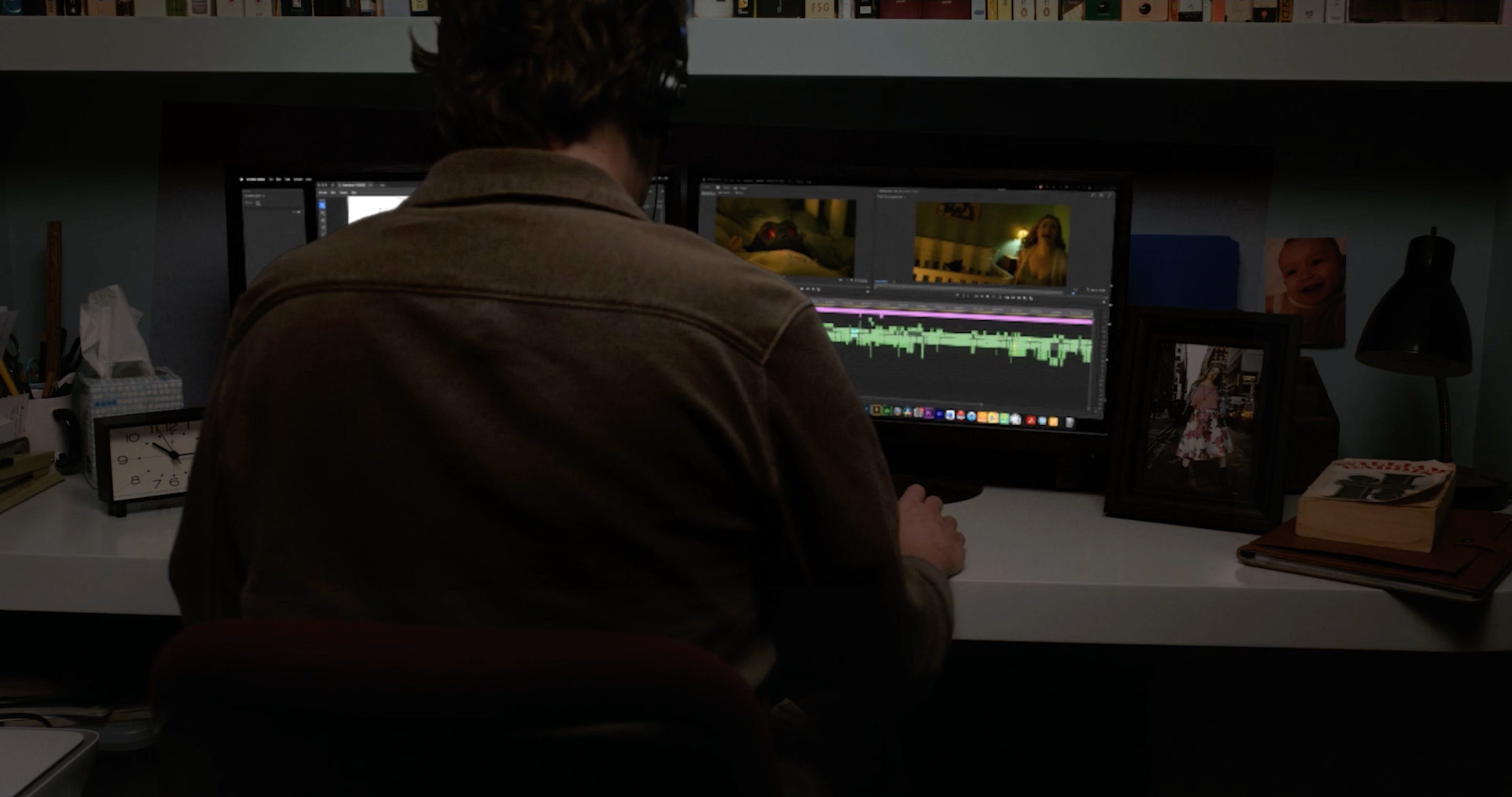
David editing Coleman’s film in a still from Resentment
They say that every film is made three times: in the writing, in the shooting, and in the editing. Now that the film was in the digital can, it was time to make it all over again. I was anxious as always, in part because I was aware of the problems we’d had in preproduction and during the shoot, but also because I’d seen very few dailies. Normally the director and the editor will get the dailies every evening, and look for any problems that there still might be a chance to fix like key shots that might have been missed or ruined, anything that would need to be picked up the following day (assuming the production still had access to the cast and the location). The editor will often begin cutting the film while the shoot is ongoing, the better to determine if anything crucial is inadequate or missing. And if everything looks good, that is very reassuring to know. I didn’t have access to any dailies until late in the shoot, so I didn’t have that reassurance.
But anxiety was not my primary emotion. The edit is probably my favorite phase of making a film. Despite the profound psychic rewards to solving a script problem, coming up with a particularly felicitous phrase or an emotionally powerful and distinctive story choice, writing is often lonely torture. And while there are additional psychic rewards simply to finishing a script, even if it doesn’t go anywhere, the knowledge that the script is only a plan for a movie that may never get made threatens to smother the whole endeavor with a blanket feeling of futility. The shoot is the most exciting part of making a film, with the greatest feeling of wonder and the most intense and broad social interaction, all of which to me makes it the most fun to me. But it’s also incredibly stressful. The whole shoot, you’re living with a clock ticking in your ear, reminding you that you have a very limited amount of time to get the footage you need, and if you don’t get it now then you will never have it. The edit, to me, has many of the rewards of the other phases with fewer of the downsides. It is very much like writing, or like a cross between writing and collage, and it has many of the problem-solving joys of writing—but it’s highly collaborative rather than solitary. I can’t imagine why some filmmakers edit their own work; I want another mind, another pair of eyes in there with me, not to mention someone with that focused set of skills. Plus, you have the constant and immediate positive feedback of seeing the film get better; for whatever reason, perhaps just because the film is the thing itself while the script is just a plan for the thing, I generally feel more sure when a choice is working in the edit than I do when I make one in writing. In any event, I was very much looking forward to the first rough cut or assembly that my editor would produce, and to getting my hands dirty with her thereafter.
We didn’t wind up getting that cut for months though, for a variety of reasons. The drives that bedeviled us on set continued to fail, slowing down the assistant editor as she set up the footage for the editing software. (This is also the reason why we weren't getting dailies.) When my editor finally received the footage, she struggled with the drives for a while as well before transferring everything to different hardware, only to discover that there were other formatting issues with the footage that caused the software to crash repeatedly even though the new drive was working fine. Issues unrelated to the film also interfered, the upshot being that the process of getting an assembly dragged on almost three times as long as it was supposed to. When we finally did get a complete cut and had reviewed and discussed it, we mutually decided to part ways and get another pair of eyes involved. Now I needed to find a new editor.
Fortunately, my producer came through wonderfully. We interviewed a number of candidates recommended by various people, but one, an editor and filmmaker whom she knew from her film school days, made a particularly strong impression, both from his work and during our conversation when we met to discuss the script and the shoot. He agreed to come on board—and quickly sank into the same quicksand that my previous editor had.
For weeks he struggled with the footage, ultimately reformatting it entirely. Even once those problems were in the rear view mirror though, the footage was challenging to work with for other reasons. Because I had done so many long takes, finding a specific line or look and comparing it to other versions of that moment in different takes of the same or other shots was extremely cumbersome and time-consuming. Those long takes also posed continuity challenges. Two characters are sitting at a bar talking for nine minutes straight: did they always take a drink at the same time in each take? Always face the same way on the same lines? My actors were absolute pros, as was my script supervisor, but the longer the take the harder it is to keep track of continuity for every motion, particularly with no rehearsal time on set. As well, while we had at least adequate coverage of most beats, particularly in Act I, there’s only so many ways you can cover a long conversation between two people sitting. There were certain points where I specifically wanted stillness, to sit with a character without much cutting, but most of the time frequent cutting was necessary to keep the conversation moving (not to mention that we wanted to use best take of each line when possible). Yet ping-ponging back between the same two or four shots can get tedious very quickly.
So my editor spent a lot of time massaging the footage in various ways: punching in, adding movement, cutting a two-shot into two very dramatic-feeling orthogonal singles. He did these things to create a more layered emotional dynamic, and also to remove things that violated continuity. Then, in editing Act III specifically, he also had to harmonize steadicam footage that was constantly in motion—something my producer had warned me about when I first broached the idea of shooting that way—so that the movement across cuts was fluid and not jarring, and to harmonize the very different feels of the footage shot by our two different steadicam operators. This is the kind of work an editor normally wouldn’t do until the fine-cutting stage, but in this case he felt that the first cut wouldn’t really represent the film adequately without it.
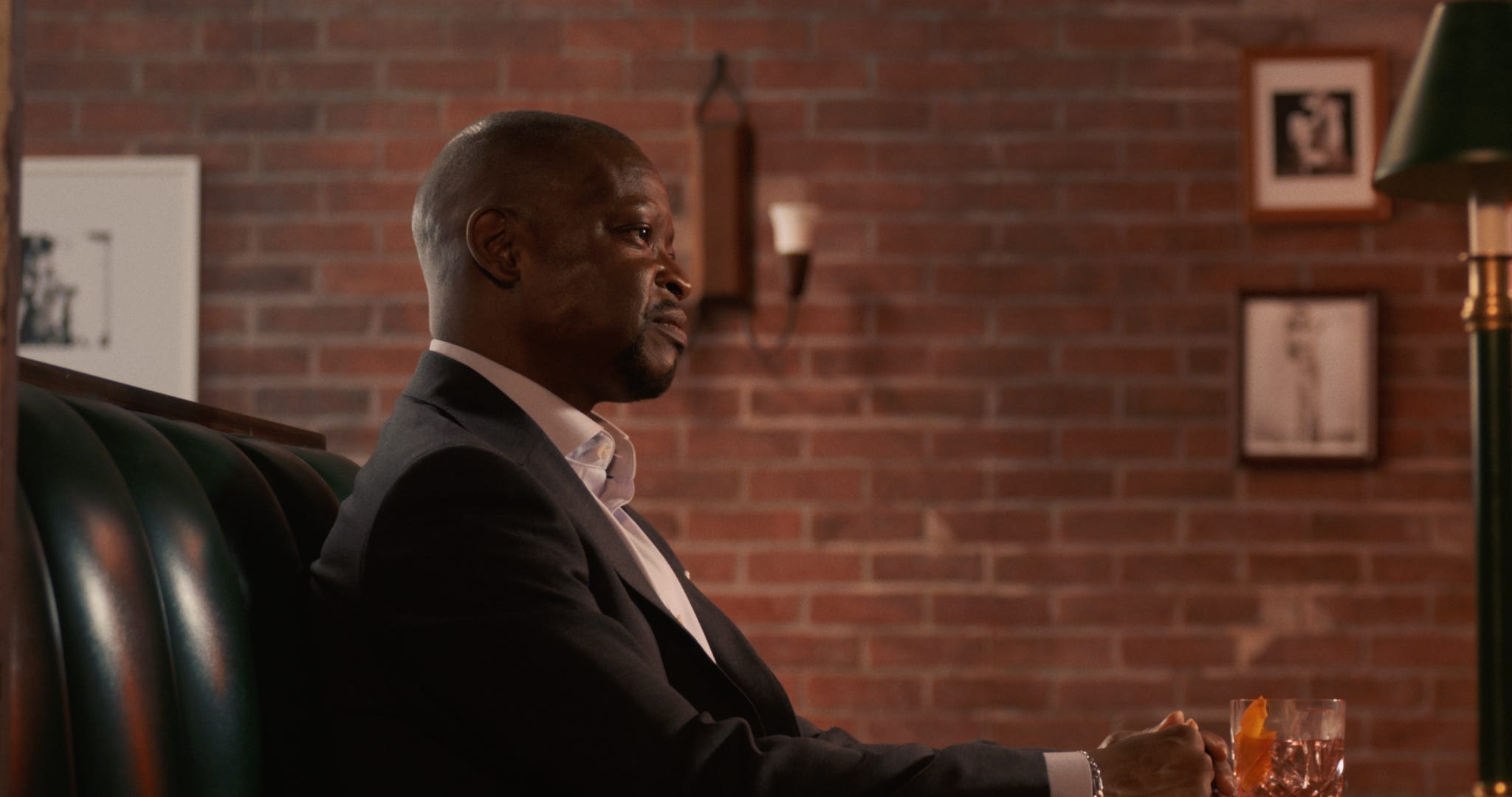
A single created from a two-shot, in a still from Resentment
The flip side of having done all that work to get to a rough cut is that fine-cutting was most of what there was left to do. Usually, the assembly of a film feels dull, bloated and generally awful; the editing to get to that point is usually just workmanlike, aimed at letting the director just see the story in full. Then you discuss what needs to change about the story at a structural level to make it work better, and what large-scale edits can achieve those changes. But Resentment, because of its play-like nature, is relentless in its linearity; there weren’t a lot of spare parts lying around to be either used or discarded. The story plays out in a particular order and only makes sense in that order, and there are very few scenes in total, so there was just very little opportunity to either cut scenes or rearrange their sequence, two of the key tools for reworking the story in the editing room. (Actually, one of the editors we interviewed had suggested breaking this linearity, telling the entire story out of sequence as a series of memories recalled at the story’s end. I understood what she was aiming for, but I did not believe that the footage we had—or, indeed, the script itself—would support that version of the film, and the editor we actually wound up hiring agreed.)
The bottom line is that while it took much longer than usual for my editor to produce an initial cut, that cut felt to me like it was already an extremely promising start for the film. We effectively went immediately from there into fine cutting, skipping the usual process of working on large-scale structural elements.
We did wind up cutting two scenes. The script contained two flashbacks to a pandemic-era Zoom call between the three main characters that are there primarily as entr’acte pauses to help the audience reset and cover for the passage of a few hours before the next act begins. These scenes felt limp, and they weren’t giving the audience the insight I was hoping they would into how different these characters were and how different their relationship felt a few years earlier. I didn’t mind cutting them—in fact, they were not part of my original plan, which had been to use exterior shots of the Brooklyn neighborhood where the film’s fictional bar location was set to create the necessary pause and signify the passage of time. But there was no time in our tight schedule to get the kind of footage that we needed, so I wrote these flashbacks, which we shot on the last day of the shoot in my friend’s brownstone, as an alternative.
My editor, though, strongly felt that we should go back to that plan, and offered to do a pickup day later in the edit to get the footage. (He had a camera and rig, as well as a drone, and experience as a DP using both.) In the meantime, he had put stock footage in as placeholders for what we would shoot, so we could see how the choice would feel. I was absolutely delighted that we’d be able to realize something like my original plan.
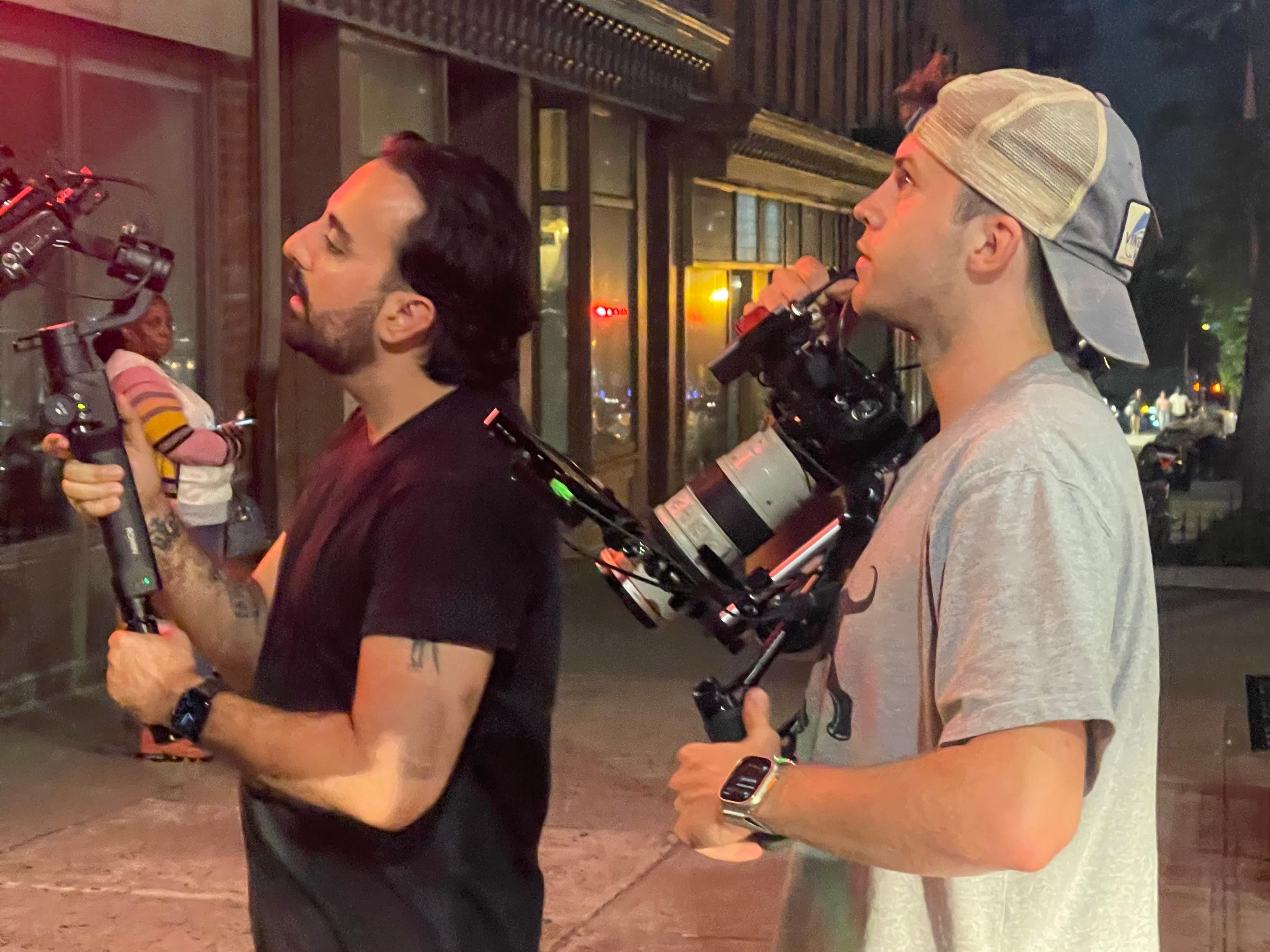
My editor and his camera assistant (my son) on our pickup shoot day
Meanwhile, we worked on fine cutting. Sometimes that was as simple as removing a line, or replacing one take with another for a given shot; other times it involved more substantial work. We struggled for some time, for example, with the second of the film’s two intimate scenes; no matter how we worked it, it always felt somewhat clinical, without the feeling of hunger, longing and loss that I was going for, and that I thought my actors had delivered in performance. We debated whether the right music would solve the problem, and decided it wouldn’t. We needed to do something more radical, and when my editor suggested layering different shots of the scene on top of one another to create a kind of fluid, dreamlike feeling, I jumped at the solution—which wound up working fabulously. The scene now had a more subjective feel, as if this were Trish’s experience of the moment, which is precisely what I had wanted.
Speaking of music, while sound editing and design is a whole separate job that comes after the edit is done and the picture is locked, creating a draft of the soundscape is also a crucial part of the edit, and music is an important part of that. Since Resentment was set in a bar, we needed an huge number of needle drops, in addition to those few moments that called for score. For the first cut, my editor had put in songs that he thought created the right mood for the time of day and the emotion of the moment in the story, as well as temp score culled from other films where score was called for (which would be replaced by a composed score at a later stage). We refined those choices based on my feedback and our discussions, and then we worked with our music supervisor to find songs we could afford that would replace the placeholders. She brought the substantial asset of a large music library that we could use as many songs as we liked from for a single flat fee; most of the cues wound up coming from that library, but it took a lot of sifting on all three of our parts to find the right ones. We supplemented these with a handful of songs not from the library, many of which were written and recorded by musician friends of my editor, to give a greater feel of specific personality to the bar mix, or to underscore a particular moment with a specific lyric.
We didn’t do any proper test screenings before an audience, but we did two rounds of sending out screener links to people who were not involved in the process of making the film: friends who were filmmakers, actors, writers, film buffs, some of them people who knew about the script and had even given me notes on earlier drafts, others who had never heard of this project. It was fascinating to see what kind of feedback we got, who gave incisive notes that were smart and readily actionable versus who gave notes that were completely unrealistic (suggesting a change of cast, for example, or that we shoot additional scenes). Useful feedback didn’t always come from where one would expect; experienced filmmakers occasionally gave impossible notes, while “civilians” sometimes showed keen insight. Encouragingly, we got very few notes that we thought were both sharp and wise but sadly unactionable because of the limitations of the footage we had.
When it came time for the pickup day, the three of us—my editor, my son (who had his own camera) and myself—set off across brownstone Brooklyn to get a variety of footage. We started by shooting the opening shot of the film through a picture window, then moved on to the roof of a friend’s apartment building to shoot some drone footage of Brooklyn streets and some shots of construction on a nearby building. We shot a footage near the courts downtown (since one of the minor characters is a lawyer), scenes of street life in Fort Greene, Dumbo and Gowanus. We shot out the window of our car while driving down Atlantic and Flatbush Avenues, and we got an amazing drone shot of a subway crossing the Manhattan bridge. We also shot three locations that I had scouted as possible exteriors for Trish’s bar, one of which turned out to be perfect, not only solving the problem of locating the bar in the real world but establishing visually that Trish and David live upstairs, something I really worried we wouldn’t be able to accomplish. We shot all day and into the night, got plenty of footage to work with, and the whole thing was pure joy, at least for me.
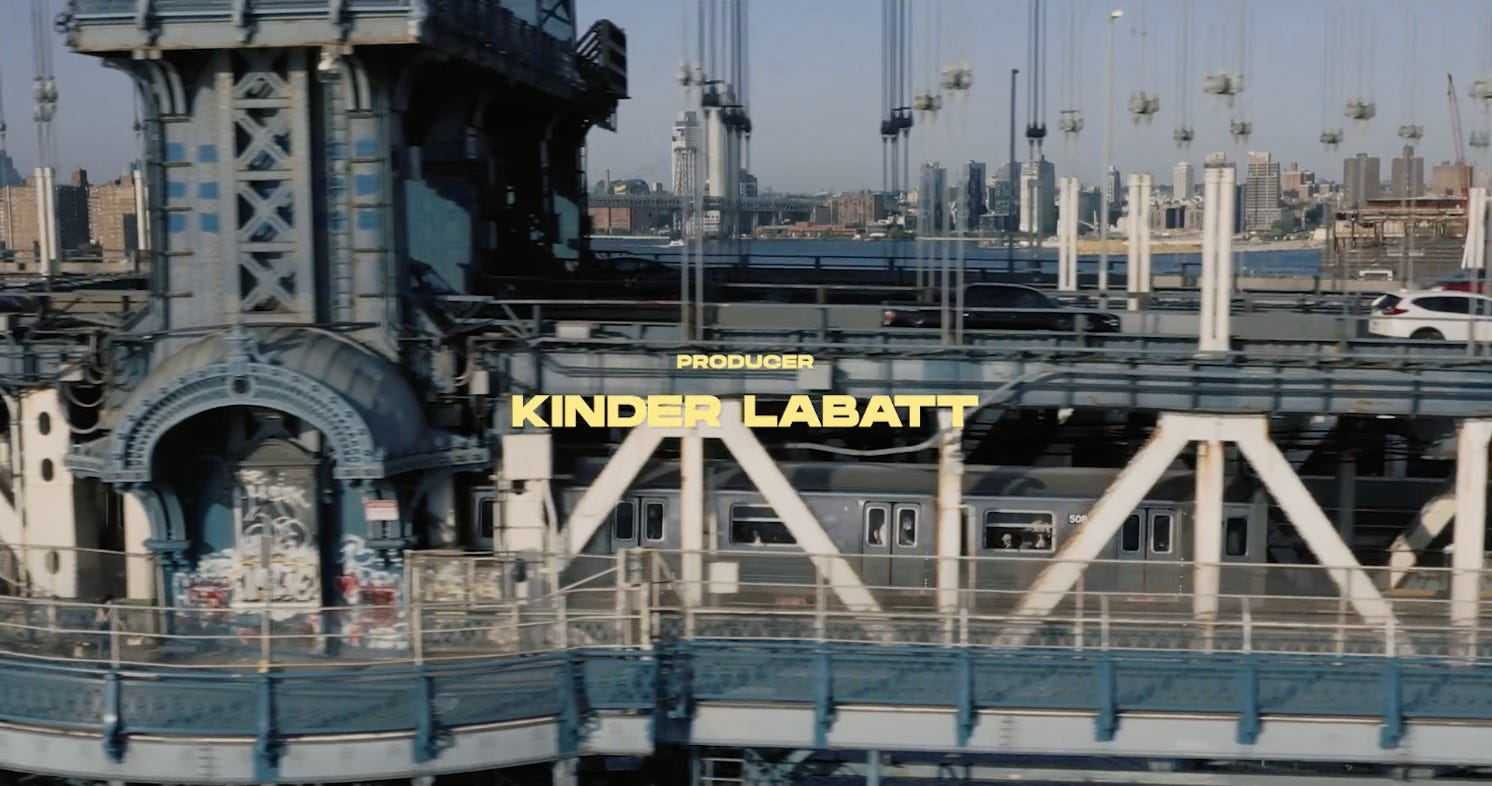
A drone shot of the Manhattan Bridge in a still from the opening credits of Resentment
The whole edit was an incredibly fruitful collaboration. That isn’t to say that my editor and I never disagreed—we disagreed plenty. If we hadn’t that would be a bad sign that one of us was deferring to the other or that one of us simply wasn’t deeply engaged in the process. We both were deeply engaged and we both had strong opinions, so we often disagreed; there’s simply no way two people will actually agree on everything. But we respected one another’s opinions and ideas, and were fundamentally in harmony about what Resentment could be, what the film was that we were aiming for, and we both wanted to fully realize that potential. When we finally locked picture, I felt confident that we had done everything we could to achieve just that.
Previous entries in this series can be found here:
If you want to keep up with the countdown to our release, you can follow us on Instagram, on Facebook, on TikTok and on X. You can also add it to your watch list on Letterboxd.
Making a film sounds even harder than writing a book. And writing a book is really hard.