
Resentment: Preproduction Blues
No battle plan survives contact with the enemy, and sometimes the enemies attack before you've even finished making the plan

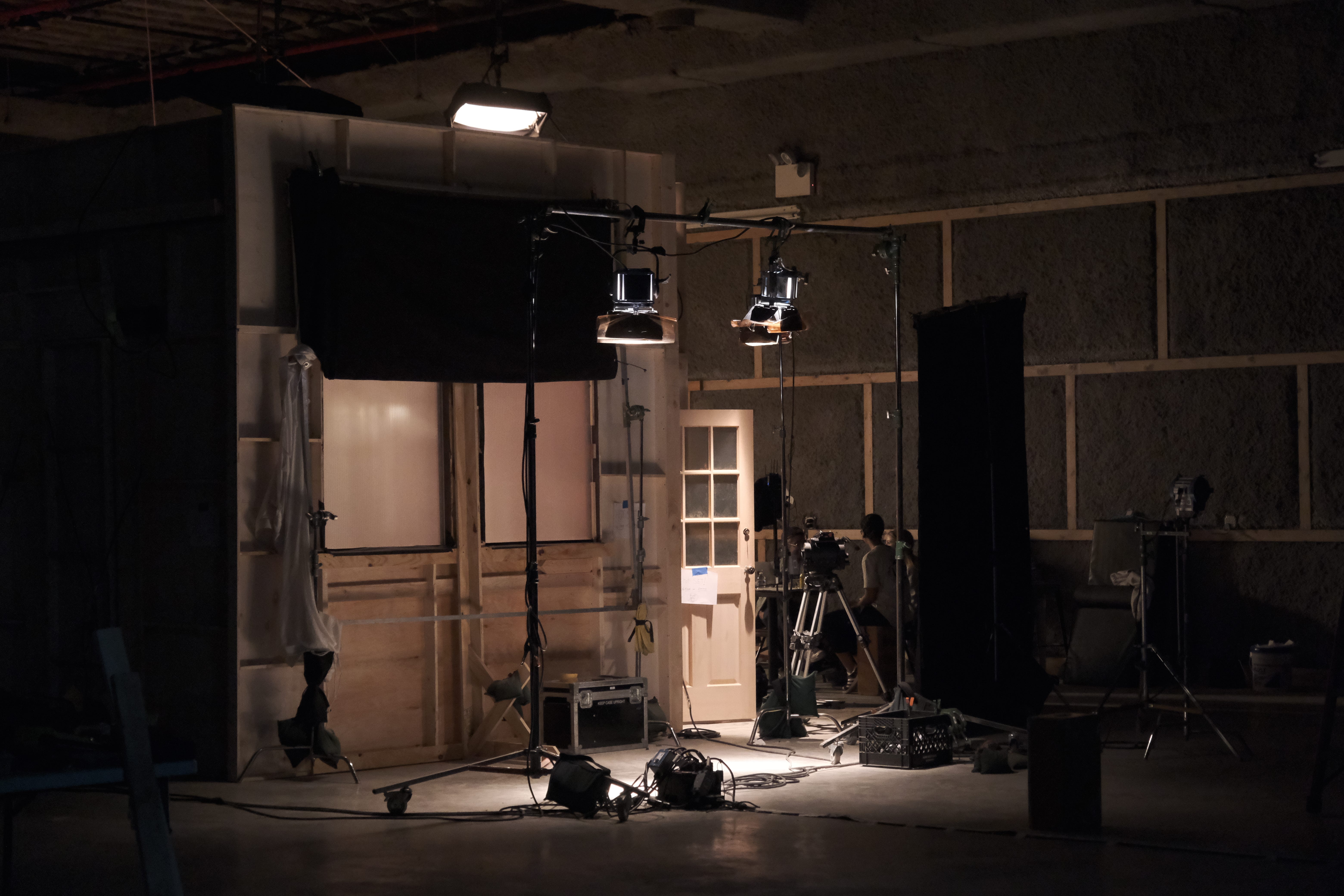
In a darkened studio, the exterior of the set of Resentment
In my experience, preproduction is the least fun of all the phases of filmmaking. There are an enormous number of decisions that need to be made, and most of them are some version of compromises or retreats: we can’t afford this, we couldn’t get a hold of that, we don’t have time for the other. Or, sometimes, we really need this, and it costs more than we anticipated, so we have to find something else to cut so we stay in budget. Money is rapidly going out the door, but you aren’t yet seeing the results of that spending, which is a source of excitement during the shoot. There’s an insane amount to do, but you can’t actually do most of it, and what you can do is all preparatory to the doing, not the doing itself. Nor do you have the benefits of the social bonding that every set has to some degree; indeed, in this early post-COVID and remote-work era, there often isn’t even an expectation that a film will have an office, or that the people working on it will ever congregate during the preproduction phase. I’m a strong dissenter from the point of view that remote is more efficient, for what it’s worth, but I know that I’m swimming against the tide. Bottom line: preproduction can be as stressful as production, but has few of the psychic rewards that production offers.
On Resentment specifically, we faced two additional sources of anxiety on top of the usual complement. First, my first AD had to drop out of the production due to other commitments. Just as our shoot had pushed to allow us enough time to complete casting, the film he was working on before ours also pushed, such that he would no longer be available until several days into our shoot. This was a psychic blow to me as my first AD was the only person who was going to be on set with whom I had worked before, and on whom I therefore could rely to understand me and be understood by me, and to tell me what I needed to know when I needed to know it. But more importantly, it was a practical challenge. We needed to find a new first AD, and fast.
We thankfully found someone who looked wonderful relatively quickly, but that wasn't the end of the stress because now our new AD needed to come up to speed on our film—and our film was a big challenge for any AD because of its peculiar nature. The core of an AD’s job is to schedule the film—to decide what scenes we’ll be shooting and in what order—and to keep the production on schedule during the shoot. Resentment was an unusual film, though, in that it was extremely play-like. It had relatively few scenes, and several of them were very long and dialogue-heavy, and would therefore take several days each to shoot. In order to be efficient about relighting, rather than just divide each scene into chronological pieces that we’d shoot one after another it made more sense to shoot all the shots in a given scene that went in a particular direction before moving on to a different lighting setup. Then there were the extras, of which there would be many for the scenes during prime time when the bar was full, but who wouldn’t be visible in every shot.
In practice, all of the foregoing that meant that the schedule depended on the shot list to a vastly greater degree than usual—and my DP and I wouldn’t be able complete our shot list until fairly late in preproduction. Since we were shooting on a set we would have a high degree of control over the shooting environment, but we wouldn’t be able to scout properly until the set was far along in the process of construction, which wouldn’t be until the very end of the preproduction period—and we reasonably expected that our shot list would need to be adjusted based on what we learned on the scout. All of which is to say that our new first AD had signed up for an essentially impossible job, and had to get a handle on that job in far less time than normally she would have.
The second additional source of anxiety was even more significant. Months earlier, we had secured a studio at a very favorable price, in part because it was a bit of an oddly-shaped space into which the set had to be carefully designed to fit. Now, as the time approached when we were to move in and start building, the owner began changing the terms, reneging on his prior commitments, and demanding more money. Our producer felt it behooved us to find another place to shoot before we lost the one we had, and we started looking. Thankfully our DP gave us a connection to a very promising space, and as we began negotiating we had another bit of good luck in the form of the WGA strike. We weren’t a WGA film, so we could still shoot on schedule (we were a SAG film, but the actors weren’t on strike yet), but the strike resulted in a whole bunch of television shows stopping production, which meant that their studios were suddenly available, triggering a cascade of price cuts that would help dampen the hit to our budget from having to go with a more expensive studio space if (as we anticipated) we lost the space we already had.
Good luck and bad luck continued to take their turns. We were able to get a functional and in fact much bigger studio space for not that much more money, but negotiating the terms dragged on, and in the end we wouldn’t occupy until several days after we were supposed have been in and working on the set. So the set build timetable perforce had to be compressed. But even as the schedule was getting tighter, the amount of work that needed doing grew. The bar was being built separately off site, and when it was delivered it turned out not to have been built correctly. There was a scene where Trish—the owner of the bar and one of the principal characters—would have to climb up onto the bar, and it hadn’t been constructed properly to hold her weight. Our team had to take the whole thing apart and rebuild it, putting them further behind schedule. As these and other problems piled up, my producer did everything she could to insulate me from them, since she feared they would distract me from the creative work I needed to focus on, but at a certain point we needed to throw more resources at the build to get it back on schedule, which meant a further hit to the budget. For that discussion I had to be brought into the loop, and it turned out that she wasn’t wrong: it was hard to focus on preparing for the shoot when I was worried we might not have a set to shoot on.
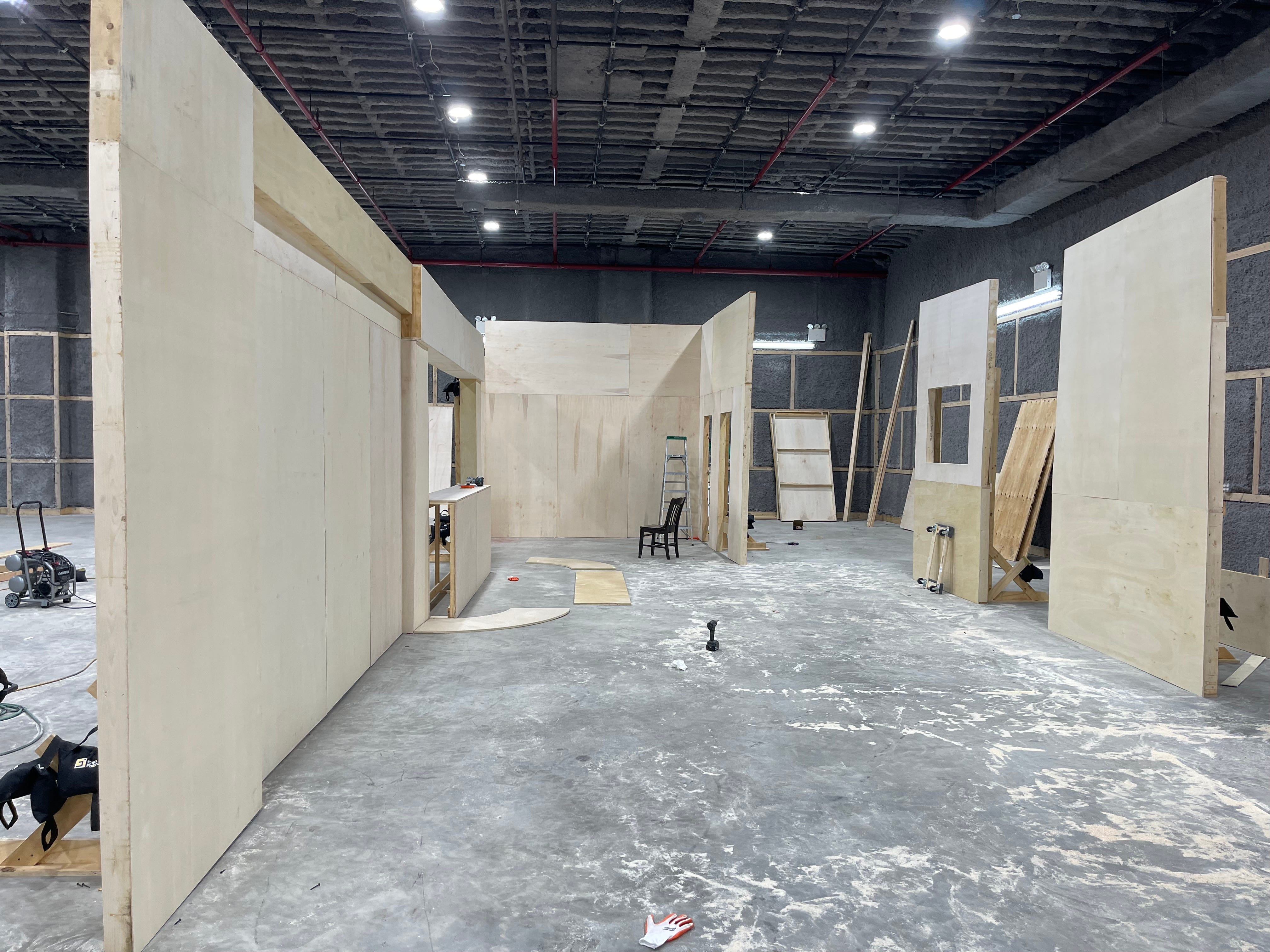
Early days of set construction on Resentment
Fortunately, I did have plenty of other things to focus on to prepare for the shoot, starting with preparing a shot list, which I find simultaneously stressful and fun. It’s stressful because I fret about missing a shot we’ll need in the edit, or about overloading the schedule with more shots than we can realistically execute, or planning for a crucial shot that will prove impossible, or that when we realize a particular shot is impossible we won’t have the equipment necessary to execute an alternative. But it’s fun because shot listing is where you actually start to see the film in your mind in some detail, where your imagination starts to get specific. (I suppose storyboarding is where that first happens if you storyboard, but I’ve never really storyboarded.)
Broadly speaking, the shot-listing process varies between two poles. At one pole, you have directors who have an extremely clear idea of how they plan to edit their film before they shoot their first frame, and who are comfortable locking themselves into that plan. If you are one of those directors, your shot-listing needs to be meticulous, because you need to make sure you have everything you will need—but by the same token the number of shots can be relatively few, because you only need what you need. You don’t need full coverage, shooting the scene from all the various angles and distances needed to give the editor the maximal number of options in editing the scene. At the other pole are directors who have little or no idea how the film is going to be edited. If all you want is coverage, shot-listing can be a relatively simple exercise: you plan on a master, a wide, medium and close on each character, a two shot for a conversation, etc. But if you do nothing but that, you’ll wind up with a very prosaic-feeling film—this is what directors mean when they denigrate a given film as looking like television. There are great directors though who also don’t construct their shot lists with a view to a clear idea of how they want to edit, but who put their creative energies into making or discovering singular images or inculcating a general tone or feel—indeed, there are great directors who don’t really make shot lists at all, improvising on the day and discovering their films in the editing room.
In my limited experience, I’m somewhere between the two poles, seeing some moments clearly but also wanting traditional coverage in some cases, and not really seeing some moments clearly until the day. But the same oddities that made Resentment difficult to schedule made it difficult to shot-list. I had written a very play-like script, and I wanted performances that had room to breathe and evolve, which meant very long takes. The film was also very contained; we were in one place for basically the whole film. To make the film feel cinematic, I needed to think about how to break this one space up into different locations, how to use the extras to provide for pauses in or counterpoints to the actions of the main characters, and how to use the camera in more interesting ways without distracting from the action. Some of this was already in the script, but this was the time to get much more specific and detailed.
My DP and I discussed a language for the first act that would be borrowed from Sidney Lumet’s film, Twelve Angry Men, where the camera starts at a relative high angle and drops slowly over the course of the film, creating a feeling of increasing claustrophobia. I wanted to do the same thing and for the same purpose: to raise the tension over the course of the act. For the second act, we talked about shifting to hand-held partway through to reflect the destabilization in the situation (and the characters’ increased inebriation), and for the third act we planned to shoot almost entirely using a steadicam in constant motion, dancing with my principals even as they danced around each other. We had plans for how to move our cast around in the bar, defining different areas of the bar as effectively different locations, and we had a number of ideas for shots that could elevate the film cinematically, making it feel less like we were just ping-ponging between talking heads. Turning our general plan into a specific list of shots was great fun, but also quite a daunting task, particularly since we couldn’t actually walk around the space and see what would work, and since we knew we wouldn’t have time for every shot we might want and needed to have a plan for triage if we got behind.
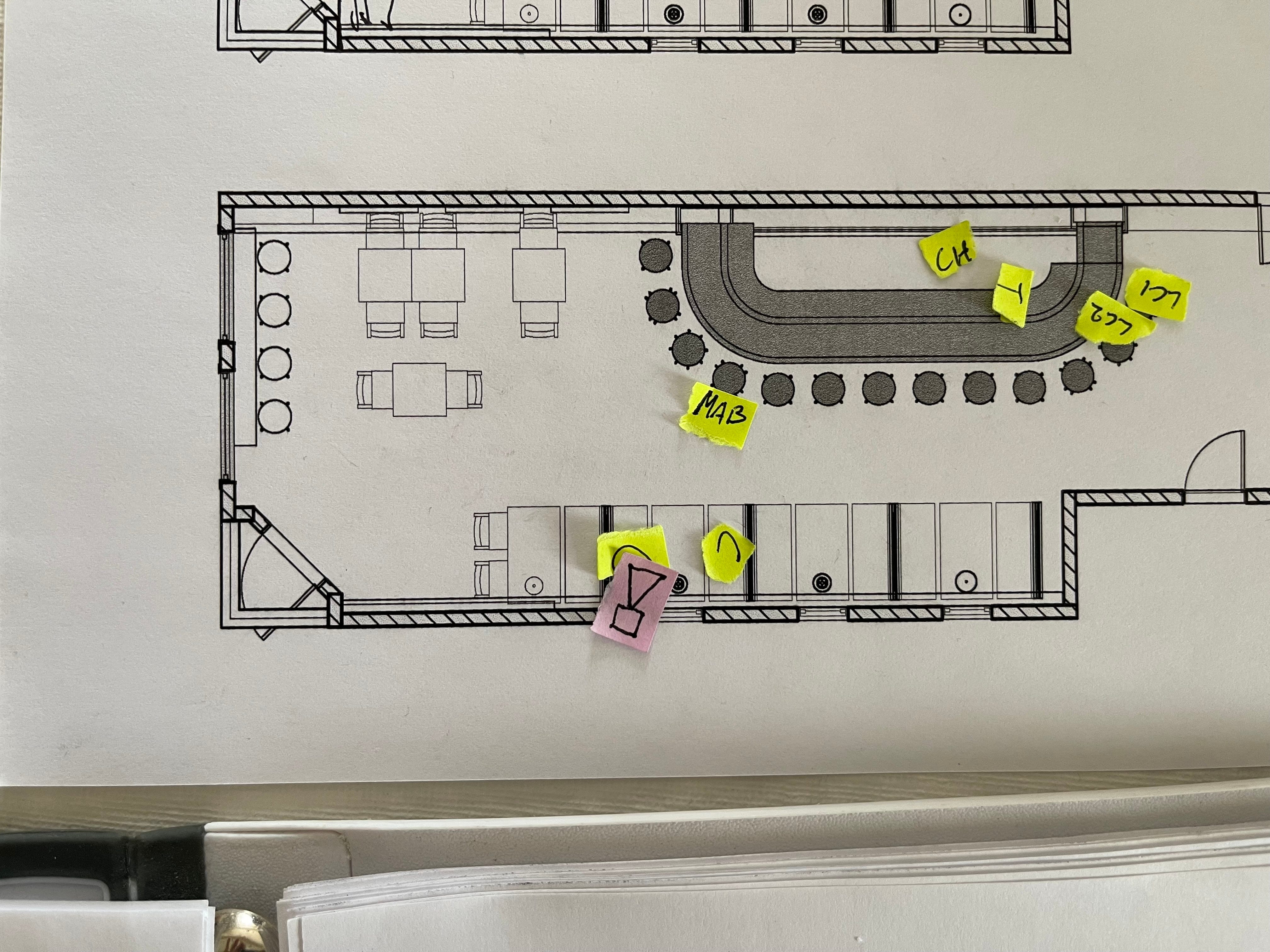
Experimenting with shots on a floor plan of the set of Resentment
The other task, which really was pure joy, was rehearsing with my lead actors. From the very first table read we did, I knew I was going to love working with all of them, and I couldn’t wait to see what they would bring to the roles. We had already talked one-on-one quite a bit before we started rehearsing, going into the history and backstory of their characters, answering any questions they had and walking through any moments that seemed particularly tricky or challenging. But when we finally got around a table together, for the first time the script came to life.
We spent several days just on table work, reading through the script multiple times and talking about it after each read through, then drilling down on particular moments. Because Resentment was so play-like, and because I was planning on very long takes, my cast needed the preparation that you’d normally get for a play, but of course as a low-budget indie we weren’t going to have the time for that. We had planned for a couple of days of rehearsal on set, but that’s not comparable to the weeks of rehearsal that a play would get. We focused primarily on table work so that all three of them could become familiar with the emotional arc of their characters flowing through the dialogue, and trusted that the transition to the physical environment of the set would itself make their performances fresh and alive. We didn’t play theater games, like Francis Ford Coppola did in the rehearsal room for Megalopolis (a fact I learned by watching MegaDoc, the documentary about the making of that film), in part because I don’t know any, but I felt like the four of us were bonding even without games to break the ice.
We didn’t do much in the way of blocking except for the film’s two intimate scenes, which we worked on in some detail with our intimacy coordinator, who was a real gem. It’s a commonplace to compare intimacy coordination to fight choreography or dance choreography, and there’s some validity to the comparison because in all of these cases you’re trying to create the illusion of spontaneity and realism through careful preparation that, among other things, keeps anyone from getting hurt. I’ve heard multiple horror stories, though, about intimacy coordinators who don’t approach the job that way, but instead approach it as if they were a branch of HR, and thereby kill precisely the genuine feeling of intimacy and security that their preparation is supposed to foster. Thankfully, our intimacy coordinator had precisely the right orientation, helping our actors get comfortable with each other and with the zones within which they were going to improvise, and helping me choreograph the scenes so they would be fluid and natural and have the desired emotional arc.
In addition, our leading lady also spent a chunk of rehearsal time working with a consultant on bartending skills, and with a choreographer on a sequence that would play out atop the bar. I had always intended Resentment to be evenly balanced between the three leads, but if you go by who had the most prep to do, our Trish was the real star of the film.
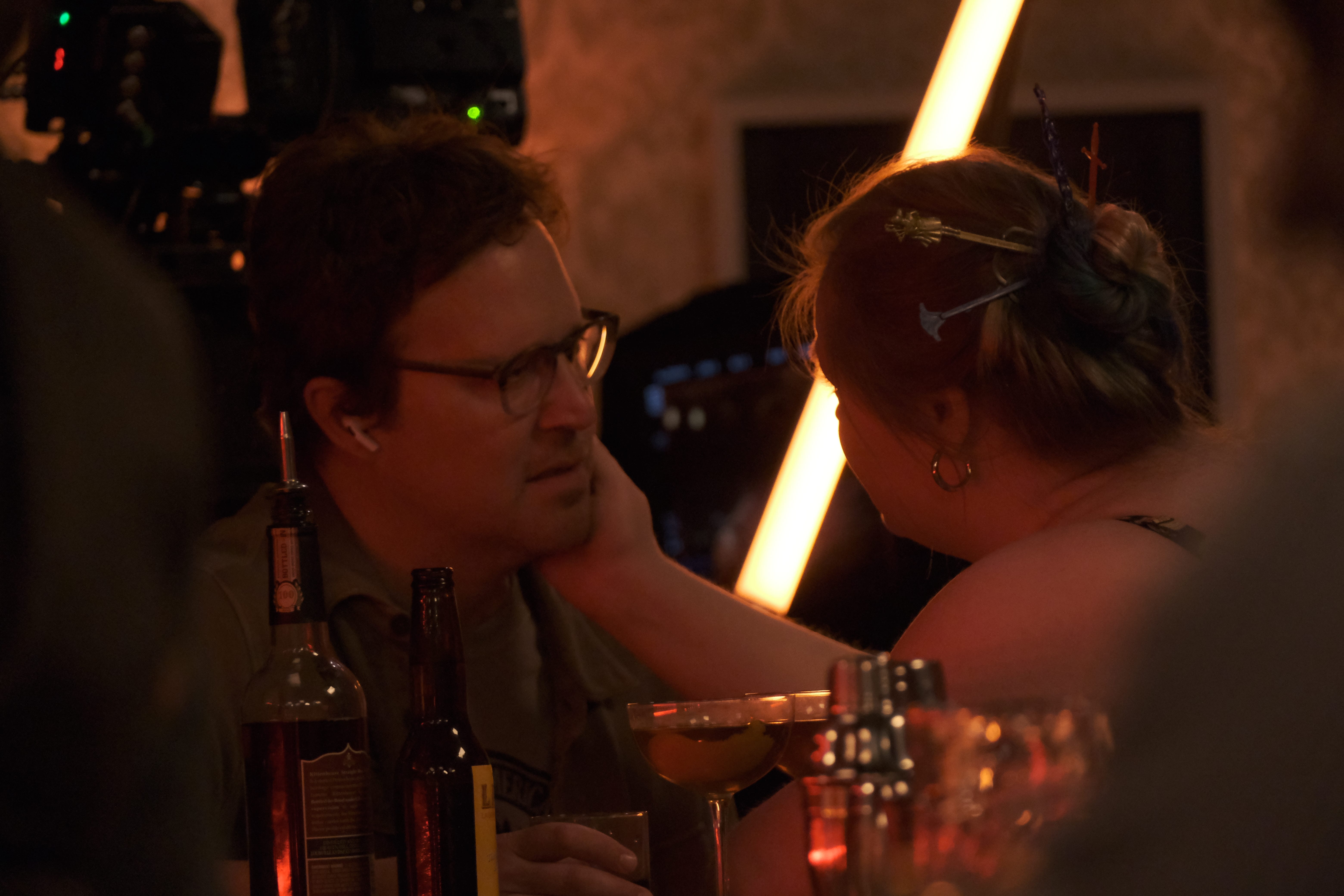
Shooting an emotional moment on the set of Resentment
While I was working with my DP and my actors, my production designer and his team were working literally around the clock, a truly killing schedule. In the end the bar he and his team built was both beautiful and fully real feeling, without which the film would be a pale shadow of what it is. Thanks to the accumulated problems, though, it wasn’t finished in time. We wound up losing all our rehearsal time on set, all our scout time with the DP, and even two days of shooting (though we wound up adding one additional day to the end of the shoot to partly make that up). Ironically, one bit of good luck we had in this sequence is that our leading lady got COVID on exactly the right day to lose the two days of shooting that we had lost anyway on account of the delays in the set build. The conjunction of the two crises meant that neither felt quite as significant as either would have been on their own, and we were extremely grateful not to lose even more days.
I don’t think I did as good a job as I should have done of expressing that gratitude, of making everyone who was working so hard feel properly appreciated for their effort. I let my own anxiety overwhelm my responsibility as the leader of the team to keep morale up as best I could, and instead became an additional source of stress to them. That is probably my biggest regret about my own performance as a director on this shoot. At least I can say, though, that I had my own shoulder to the wheel creatively in solving problems as they arose. One day I came to the construction site that would be our set to look at the art that was to hang on the bar’s walls—and both my designer and I saw immediately that what had been delivered was all wrong, totally inappropriate for the space and the vibe of the film. We thought quickly and decided to shift to hanging vintage black-and-white photographs of burlesque dancers, and he and I set to digging up appealing images on the internet and determining whether or not they were in the public domain. Later, the planned design for the bar’s floor fell through, and we had to come up with a last minute replacement. We were making decisions incredibly quickly, and he was doing it on essentially no sleep; I think it’s a great testament to his talent that the bar looked as amazing in camera as it did.
But the stress took its toll, on all of us. It also had a big impact on the budget, not only because we had to throw additional resources at the build but because we had to add a day to the shoot and had to reschedule all of the extras we had hired for different days than they had already been booked for. The three acts of the film took place at different times of day, which meant totally different lighting, and also different extras, and in Act II when the bar was going to be full the number of extras we needed was significant, and we’d need them for multiple days. We had to book them in advance, and so the change in schedule meant that we’d be paying for days we wouldn’t be using them, plus for additional days when we would.
I tried not to think about any of that and to focus only on the job at hand. As the main part of the set was being completed and the floor was being installed, we pre-lit for our first day of shooting. The next twelve days were going to be intense. For the sake of the film, in the midst of that intensity I needed to find the openness to play that I felt in the rehearsal room.
Previous entries in this series can be found here:
If you want to keep up with the countdown to our release, you can follow us on Instagram, on Facebook, on TikTok and on X.