
Resentment: Getting the Gang Together
It doesn't take a village to make a film; it takes an army

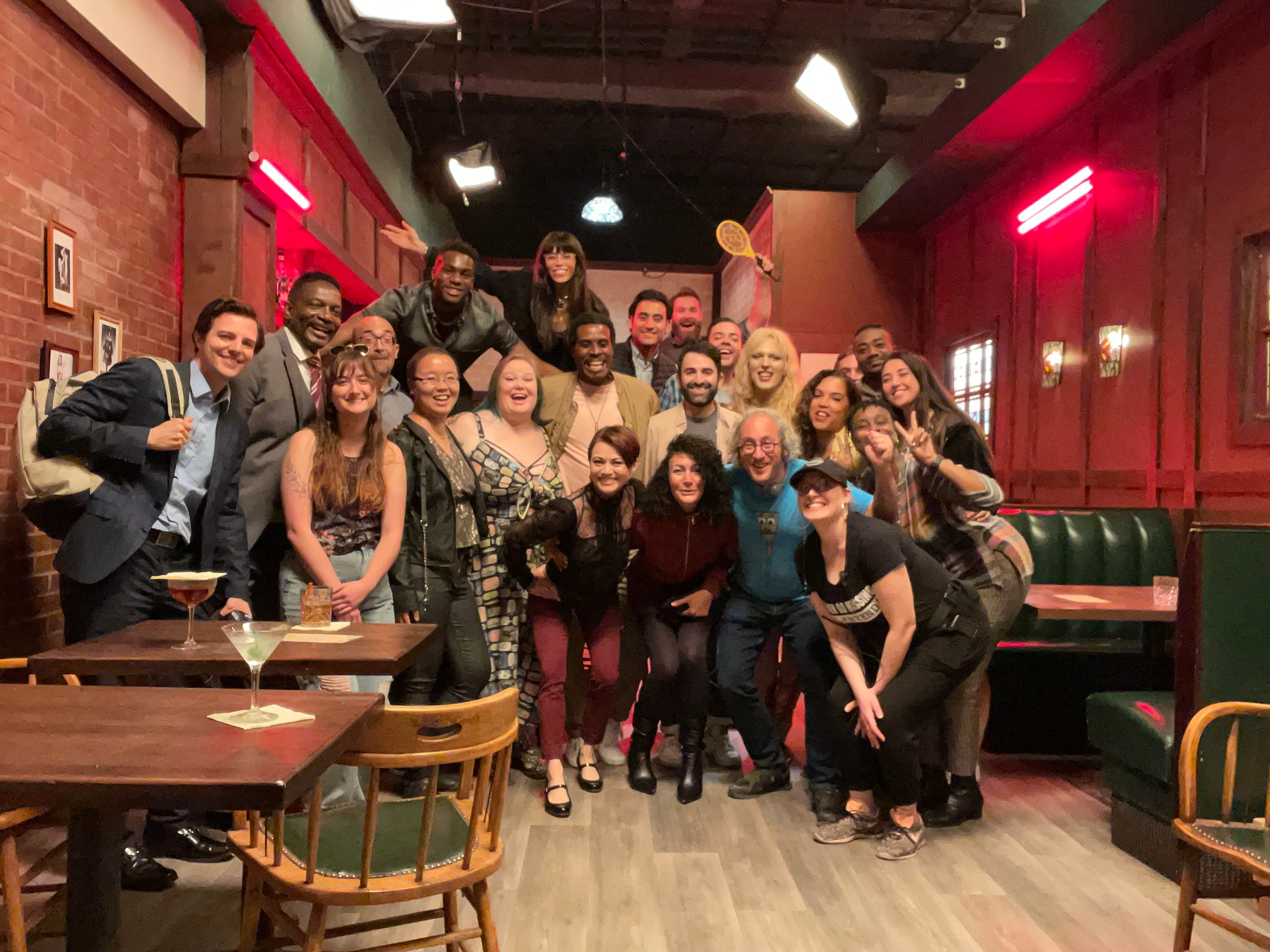
Part of the cast and crew of Resentment, celebrating on the last shoot day for many of them
Film, more than most art forms, is an inherently collaborative activity. Even filmmakers who wear more than one hat on a given project—who direct and produce, or direct and edit, or direct and star—need the expertise and, ideally, the artistic input of dozens to hundreds or even thousands of other people to make a film. That’s part of what drew me to filmmaking from the beginning—writing is lonely, but filmmaking is social. I needed a team, but I also wanted one. But what made me think I was qualified to be their leader? What made me think that I could direct a feature film?
I did not originally imagine myself as a director; my initial ambition, after all, had been to write. But I wanted to see my work get made, to become what it was intended to be. So after we wrapped Infinitely Polar Bear, I approached one of the producers of that film with a script for a short film that I had written. Did he know any directors who were looking for projects for whom this might be a good fit? He asked me why I didn’t direct it myself, and I replied: because I didn’t know anything about directing. Don’t worry, he said; directing is the only job where you don’t actually have to know how to do anything in order to do it.
This is not actually true. It is true, though, that directors have a much less technical role than the various department heads who work under them. The director’s primary job is to communicate their vision clearly and to manage all the other people involved in making a film effectively and collaboratively to bring that vision to life. To do that well requires that you know something about everything. You’ll be much more effective at collaborating with your cinematographer if you know something about cameras and lenses and lighting; much more effective at collaborating with your production designer, costume designer, makeup artist, sound recordist, etc. if you know something about their jobs; and of course more effective at collaborating with your cast if you know something about acting. They’re going to know more than you—you want them to know more than you—but the more you know about what they do and how they do it the better questions you’ll ask, and the better you’ll understand their answers. Indeed, before you even hire them, you’ll parameterize their jobs much better if you understand what they can and can’t do with the resources you will have available, and will therefore be more likely to hire the right people.
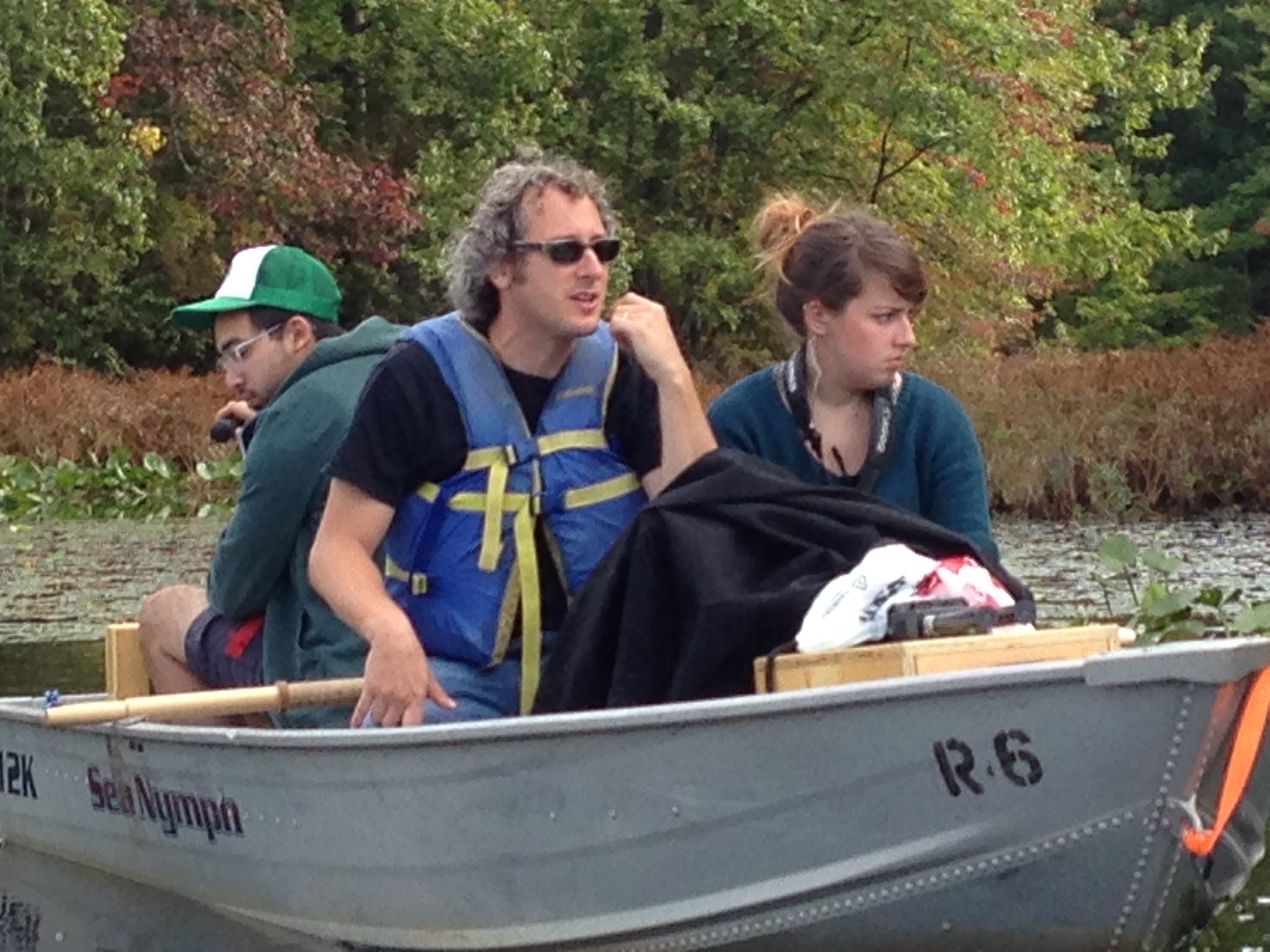
Me, on the set of my first short, Gone Fishing
But the best way to learn is to actually do it, so the producer’s advice that I should just direct that short film myself despite my ignorance was still valid. That film was Gone Fishing. The experience of making it was quite a roller-coaster; the learning curve was phenomenally steep, huge numbers of things went wrong, and I was wracked with anxiety for much of the process. But I also had an absolute blast—and I’m still quite proud of the result. More to the point, I’d caught the bug. Two and a half years later, I directed another short film, Public Speaking, which I’m even prouder of and which was more purely a joy to make. I could feel how much I had learned, and was putting that learning to good use. After that experience, and with my experience on the producing side on several features as well, I was feeling confident enough to direct a feature.
The logical first place to start building a team that I could make one with was with the people who I had collaborated with on my shorts. Unfortunately, most of them either weren’t available or weren’t good fits for the project. Only two people I had worked with before wound up coming on to work on Resentment: my first assistant director (AD) and my editor. My executive producer-slash-production counsel also came on very early. I had a lot of people still to find.
The next member of the team to join was my cinematographer, also known as a director of photography (DP), who I was introduced to through my first AD. She’d read and loved the script, and we hit it off immediately, discussing films and directors we’ve loved (as well as those we didn’t like at all), what my cinematographic touchstones were for Resentment specifically, and what projects she’d worked on before, which included one highly-contained film that, while very different from Resentment, I thought was also a useful point of comparison. Along with the editor, the DP is probably the closest and most important creative collaborator a director has. As a novice, I wanted a DP with a lot of experience, but I also wanted someone I felt I had a good communication with, who I trusted would be aligned with my vision, and who was prepared to work at the budget level and schedule that we were going to be living with. She seemed like a great fit.
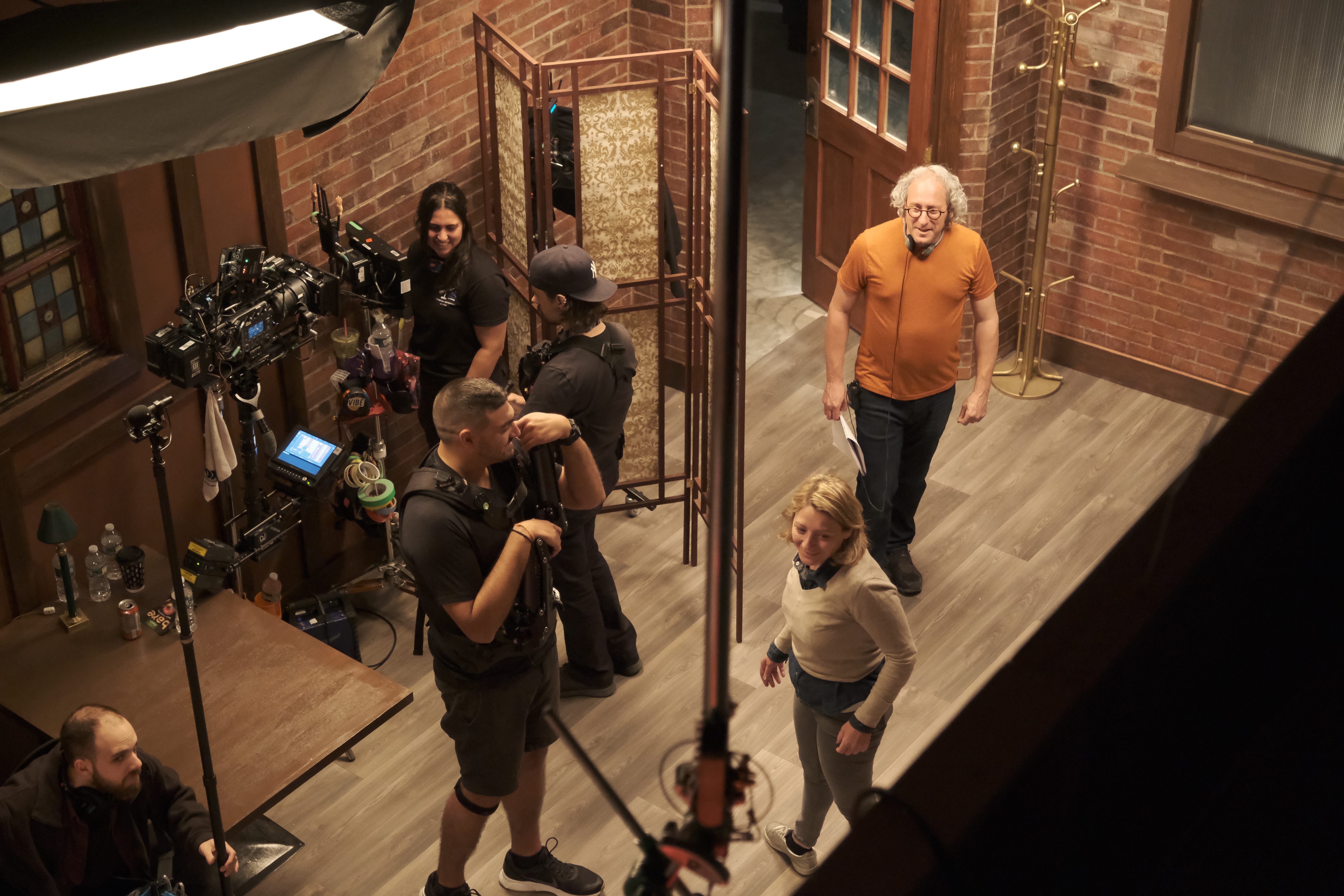
My DP with me, the steadicam op, and other members of the team, on the set of Resentment
The other creative department heads largely came through my producer, and by far the most important of them was the production designer. Nearly all the action of the film would take place in a Brooklyn cocktail bar, so once we knew we were building a set I wanted to make sure the person designing and supervising the building of that set could create something that didn’t feel like a set—that felt real, lived in, with a history. Once again, I felt like I developed an immediate rapport with the man my producer brought to the table. I shared photos of a number of bars that were inspirations for me, and talked a bit about what I imagined might be the history of the bar: starting as an Irish bar, then, a Black-owned bar as the neighborhood changed, and finally its current incarnation as a hip cocktail bar in a gentrifying area. I wanted the design to reflect that history, and he immediately had ideas for where we might source elements that would help achieve that goal. We also brainstormed ideas for the bar that would illuminate themes of the script, as well as talking about the practicalities of how the set would be used, what kinds of shots we would need to get and how the set could be built to accommodate these.
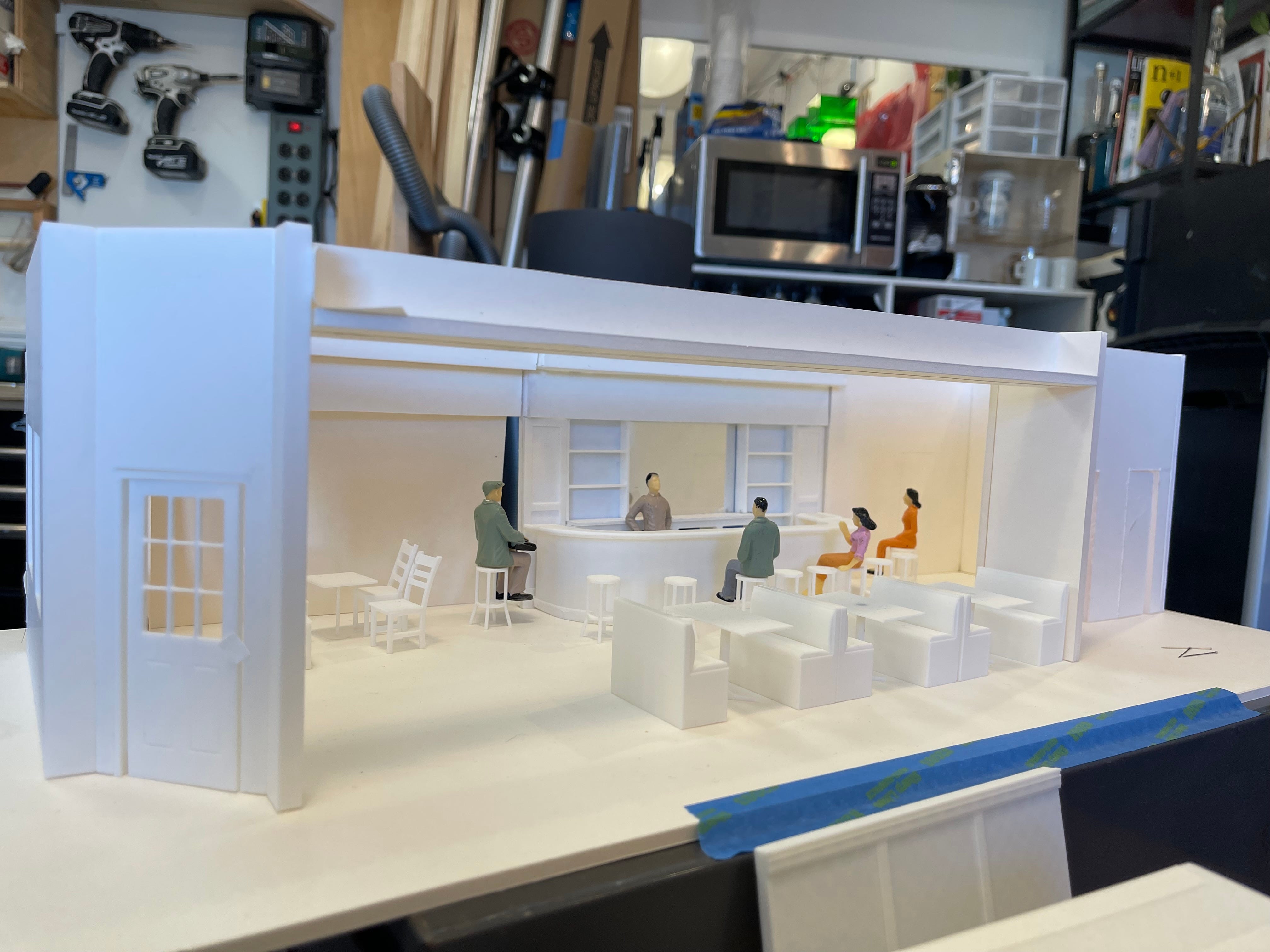
A maquette of the bar in Resentment
I had similar conversations with my music supervisor, who my producer also brought to the table early in the process, long before the shoot began. Because Resentment largely takes place in a bar, we were going to need music in the background essentially throughout the action. It was essential that the music both feel real and appropriate to the venue and to the different times of day of the different acts, but also subtly underscore the emotional tone of different parts of the script. We were going to need dozens of music cues, and we’d generally be using the entirety of the song—which could be a very expensive proposition. Yet we had to execute on a very tight budget. We didn’t really need to identify all the music we would use prior to post-production, but I needed to feel like we had this crucial function covered.
In this phase, before pre-production proper had begun, collaboration was mostly just a joy. We weren’t under time pressure yet, and had the freedom to explore and brainstorm together, and that process reinforced for me that I had the right people. When my DP and I discussed the language of the film, I referenced something Mike Nichols once said about how every scene in a play (or film) is a contest, but the contest can play out in any of three ways: either as a negotiation, or as a seduction, or as a fight. He was talking about how actors relate to the scene, but I wanted the cinematic language of our three acts to divide similarly, the first act as an interrogation, the second as a fencing match, the third as a dance—and we discussed how we might use the camera to deliver on this idea, which also implicated what kind of camera we needed (in particular, that we needed a steadicam for the third act). When we were discussing the geography of this fictional bar, my production designer and I realized that the bar’s office, where a crucial scene would take place, could be located under the stairs that led up to the owner’s apartment, and we envisioned seeing the underside of those stairs built into the ceiling of that room, pressing down from above on the characters. That became part of the design. And my costume designer came up with the idea for the hair combs that my leading lady wears, which are adorned with an array of cocktail stirrers. That costume element wound up becoming a prop that multiple characters used to wonderful effect in a crucial sequence in the second act.
The other crucial role was the casting director. Indeed, that role had to be filled before any of these others formally were, because while we had tentative shoot dates, we couldn’t make them firm until we had our cast committed. To find our casting director, we reached out through producers and directors we knew, and settled on someone who was enthusiastic about the film and had worked on numerous previous projects from low-budget films to major prestige television shows. In New York at least, a very small group of experienced casting directors manage the casting process for most high-profile projects, but they have teams of other casting people working under them doing the bulk of the work and with a broad array of knowledge and good relationships with the agents and managers. There’s a whole lot of talent working under the radar, and I feel like we found someone great. And she found us a great cast—at least three times, in fact, though she saved the best for last.
The first phase of casting is, in retrospect, the most ridiculous one. You imagine your dream cast, people who not only are perfect creatively but are big enough stars to attract financing and distribution all on their own—and then you agonize over which of these people who are unlikely even to read the script are the ones you should go to first. You put your best foot forward by making a firm offer, which we were able to do because of my backstop of the financing, but even so, most people are going to say no. It’s absurd to become attached to any one idea, and yet for me at least it’s impossible not to start fantasizing and, along with that, fretting about whether I made the right decision, whether about who to go to or what to say in my cover letter that would go along with the offer.
Here’s how we described our three leads in the breakdowns, redacting anything that would reveal key details of the plot:
[DAVID] Male, white, 37-44. Muscular chest with a bit of a gut threatening to break through. David is Trish’s husband and the father of their young daughter. He’s a writer and filmmaker who never actually made a film, confronting at forty the possibility that what he’s nourished all his life is not ambition but excuses for his failure. He’s adept at converting that inner anxiety into anger. LEAD
[COLEMAN] Male, Black, 37-44. Tall, slim, handsome and presents as highly confident, but with an inner sensitivity and vulnerability. Coleman has been friends with David since high school. He’s a finance bro making a surprising midlife turn to deferred creative ambitions. LEAD
[TRISH] Female, white, 33-38. Big-boned and big-busted, an edgy, voluptuous woman who owns her sexuality. Trish occupies space without apology. She’s David’s wife and the mother of his child. She also owns and manages the successful bar where much of the action of the film takes place. LEAD
We needed to find three great individuals, but they also needed to fit together well, so we tended either to make offers in groups of three or to one actor who could be the anchor that we would build around. Encouragingly, after collecting our first few rejections, we thought we were underway. While we were waiting for a response to our latest offer for Trish, we heard from the agent for a different actress that her client was enthusiastic about the role, saying it was exactly what her client wanted to do. We agreed, so as soon as we got a rejection from the actress we had already gone to, we made an offer to her, and to a Coleman who we thought would work perfectly opposite her (and who we thought would be more likely to say yes once she jumped on board). But in the short time between her expression of interest and our offer, she got offered a series regular role on a new television miniseries from an A-list executive producer. She wasn’t going to turn that down to make our little indie film. Back to the drawing board.
After some further rejections, we thought we had all three leads cast in one fell swoop. The actor we offered Coleman accepted the role just based on the script. We were ecstatic: he was a wonderful actor whose work I had admired for years, and he had what I thought was a crucial quality for the role of being a natural magnet for audience sympathy. There was nobody I could think of that I would rather be working with as my Coleman. The actors we offered Trish and David were also enthusiastic about the script; they just wanted to speak to me before making a decision. Needless to say, I was happy to do that.
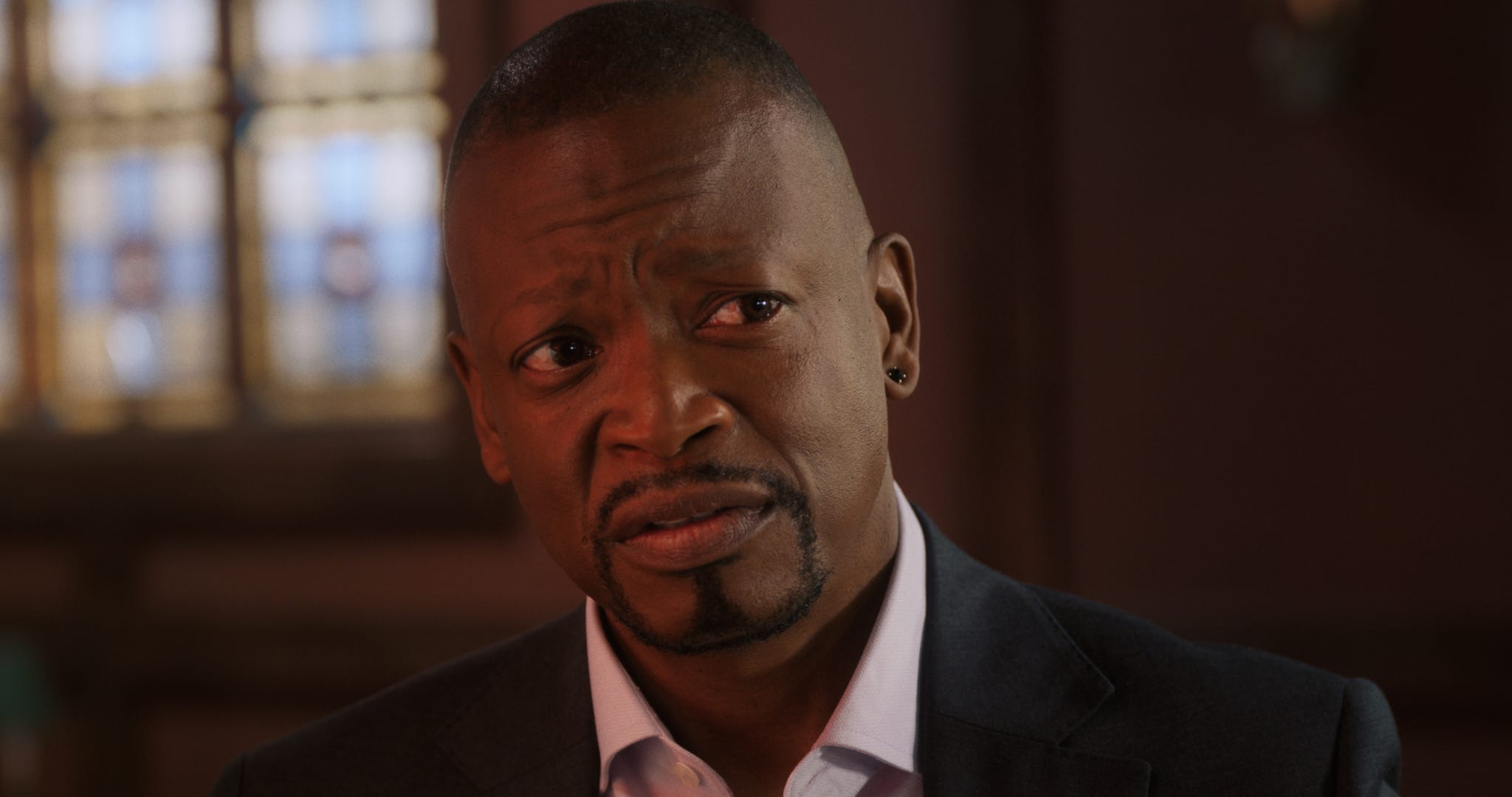
Lawrence Gilliard Jr. as Coleman in Resentment
I met with our prospective Trish on Zoom, as she was in the U.K. (she was British, though based in New York). We had what I thought was an excellent chat, talking about her career and her thoughts about the role (she felt that her language sounded a bit Irish, and wondered whether I’d be open to her playing her with an accent, which I absolutely was), and about my own vision as a director. We had an extended discussion about the physical intimacy and vulnerability that the role required; in passing, she told me horror stories about an intimacy coordinator whose interventions so disrupted her ability to perform a sex scene that she had the person thrown off the set. I reassured her that the intimacy coordinator we would be hiring would not have that mentality, and would be there to support her and make her feel comfortable, not just to protect the production from a lawsuit. I had also seen the scene that emerged from the unpleasant process she described, so I could reassure her that what wound up on screen worked very well, and more generally that I was confident that she’d be fantastic. She still had anxieties about how her body would appear on screen and wanted to be reassured that I wasn’t out make her look unattractive, which I tried my best to do, and by the end of the call I felt confident that she wanted to play the part.
I was even more encouraged by the conversation I had in person with our prospective David. He pretty much said yes at the start of lunch; we spent the rest of the time playing getting-to-know-you, and at the end of lunch he reiterated that he was ready to accept our offer and play the role. But my confidence was misplaced in both cases. The actress got back to us in a couple of days to say that while she loved Trish she wasn’t feeling confident enough in her appearance to take the risk of playing her. Our David, meanwhile, vanished for over two weeks, only to resurface to have his agent tell us that he wasn’t going to do the film after all, for reasons that didn’t strike us as terribly convincing. By this point we could no longer make our original shoot dates, and had to push to give ourselves time to complete casting. We had to go back to our Coleman to confirm that he could do our new dates—which he thankfully could—and then make new offers.
We had a virtual repeat of both our Trish and David disappointments with a subsequent offer for Trish: an actress who said yes, then vanished for weeks and reemerged to say that upon reflection she wasn’t prepared to do it. But by this time we had concluded that we might need to do auditions to find our Trish, and had collected a number of self-tapes—and one of these absolutely blew me away with the intensity and seriousness with which the actress approached the role. She and I met for a beverage, and at our first meeting she poured out everything that had been going on in her life and her career that seemed to her to point directly at this role. She simply had to do it. And I had to have that passion. We did one in-person call back just to confirm that we were happy with how she’d handle the physical aspects of the role, and then we knew we had our Trish.
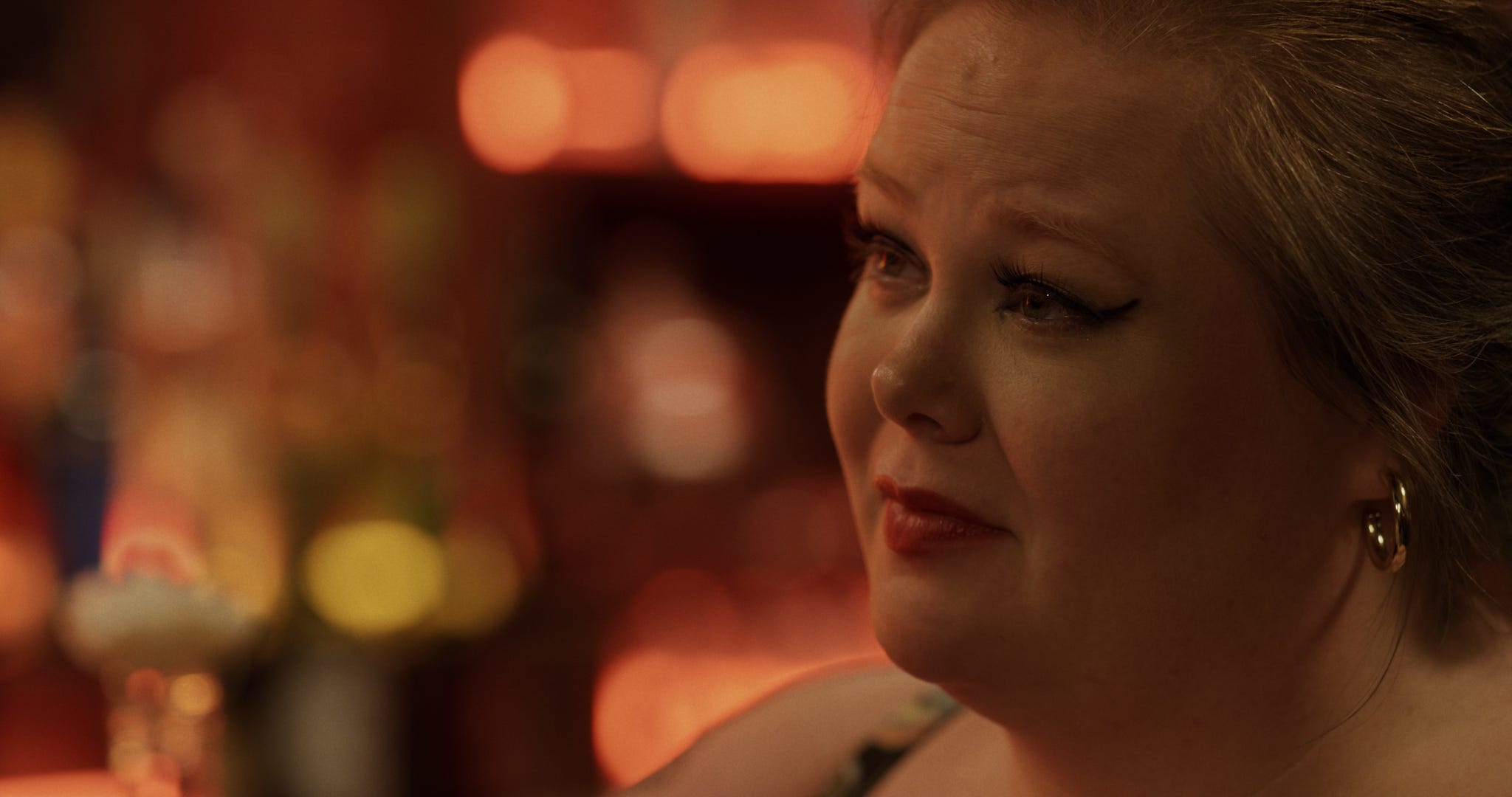
Jen Ponton as Trish in Resentment
I’ll confess, we went to a lot of Davids, and I got adept at getting a rejection and turning around another offer within hours, sometimes within minutes. I remember getting a rejection while I was on my way to the garage to get our car to go out of town for the weekend. We wanted to get another offer out before I left, so I got the car, drove back to my apartment building, parked at a hydrant, ran upstairs to dash off a revised offer letter for our next candidate and email it to our casting director, ran back downstairs, hopped back in the car and off we went. I suspected from the beginning that the challenge with casting David would be finding someone comfortable being kind of a jerk—all three leads have their more admirable and their more objectionable aspects, but David starts off as particularly unlikable—and the results of our casting efforts to this point seemed to confirm my fears in that regard. But through much of the process one name kept coming up who I thought would be kind of perfect creatively, but who we hadn’t gone to yet. Lo and behold, when we made him an offer, he was interested. We spoke. We clicked. We had our leads.
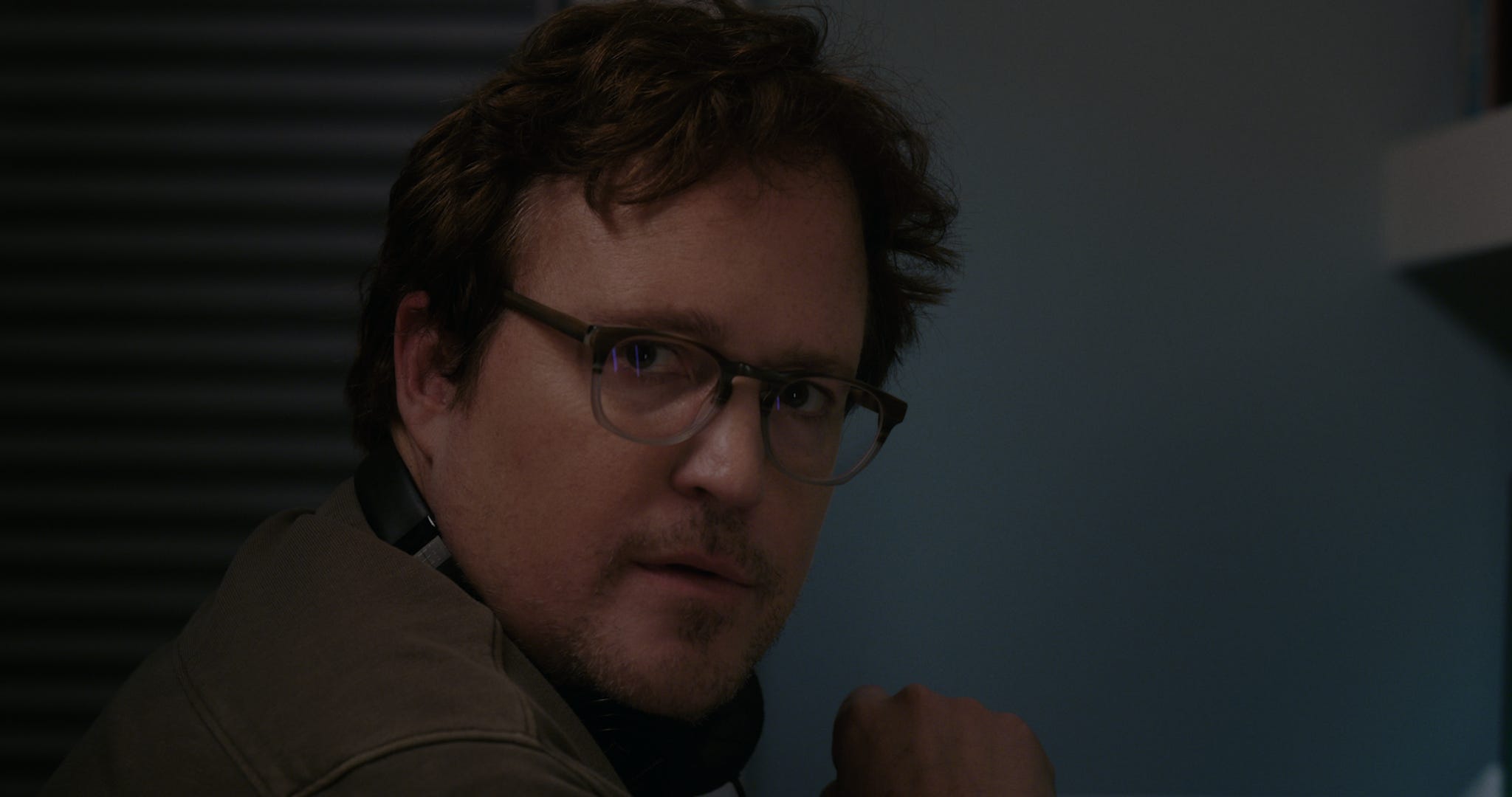
Patch Darragh as David in Resentment
We still had to cast the ancillary roles, a process that stretched well into preproduction. Every one of them turned out to be a joy to work with and perfect for their parts. Our Christian—the primary bartender—was a particularly fortuitous find, being not only a total mensch but a professional bartender who brought a level of realism to his role that was invaluable. As much as the production design itself, he’s the reason Trish’s Place doesn’t feel like a set, but like a real bar.
We had our team. Now we were ready to make our film. Or so we thought.
Previous entries in this series can be found here:
If you want to keep up with the countdown to our release, you can follow us on Instagram, on Facebook, on TikTok and on X.
💖🍸 love you, pal! thank you for these thoughtful (and far too kind!) missives about your process 💫